
Technical Resource
Choosing the Right Positive Displacement Pump: Gear vs. Vane vs. Piston
What Are Positive Displacement Pumps?
Positive displacement (PD) pumps move fluid by repeatedly enclosing a fixed volume of liquid in a cavity and mechanically displacing that cavity toward the discharge port. Unlike centrifugal pumps that accelerate fluid, PD pumps trap fluid and push it forward, and output flow is near-constant regardless of pressure. This fundamental difference makes PD pumps the choice for viscous fluids, metering applications, and situations requiring precise, predictable flow rates.
The three primary categories of positive displacement pumps are external gear, vane, and piston. Each design achieves positive displacement through a different mechanical principle, resulting in distinct advantages and limitations. Choosing the right type requires understanding the trade-offs in cost, pressure capability, flow smoothness, maintenance complexity, and suitability for different fluid viscosities.
Gear Pumps: Simplicity and Robustness
Rotary gear pumps use two intermeshing external gears (one driven, one idler) rotating in a close-fitting housing. As gears mesh and separate, they create expanding cavities that trap fluid at the inlet and contracting cavities that discharge fluid at the outlet. The design is mechanically simple: two rotating parts, two bearings, basic housing.
How Gear Pumps Work
As the drive gear rotates, its teeth push the idler gear, creating two separate chambers of trapped fluid. The inlet port is located where teeth are separating (cavity expanding), allowing fluid to be drawn in. The discharge port is located where teeth are meshing (cavity contracting), pushing fluid out. The seal between gears and housing determines pump efficiency; tighter clearances improve efficiency but increase manufacturing cost and sensitivity to contamination.
Gear Pump Strengths
- Excellent self-priming: Simple cavity geometry traps and expels air effectively; gear pumps prime from dry inlet conditions better than any other PD design.
- Outstanding high-viscosity performance: Viscous fluids seal clearances naturally. Adhesive and asphalt transfer are ideal applications.
- Simplicity and field serviceability: Two gears, two shafts, basic housing mean easy diagnosis and field rebuild with standard replacement kits.
- Competitive cost: Simple design results in lower manufacturing cost compared to vane or piston pumps of equivalent displacement.
- Bi-directional operation: Reversing rotation reverses flow, allowing line clearing without re-plumbing.
- Handles gas-entrained inlet: Self-priming capability allows operation with air or gas bubbles in the inlet stream.
Gear Pump Limitations
- Moderate flow pulsation: Each gear tooth engagement creates a small flow pulse. Noise and vibration result from repeated pulsation. Harmonic resonance in piping can amplify pulsation.
- Maximum pressure limited to 150–300 PSI: Higher pressures require stronger gears and closer clearances, increasing cost significantly. Beyond 300 PSI, piston pumps are more cost-effective.
- Not suitable for extremely high pressure: Applications above 500 PSI require piston or plunger designs.
- Contamination sensitivity: Small clearances (0.001–0.005 inches) can be damaged by sand, rust, or corrosion particles. Inlet filtration is critical.
- Volumetric efficiency drops at low viscosity: Thin fluids (water, diesel, light oils) experience more slippage across clearances, reducing efficiency below 90%.
Typical Applications
Adhesive transfer (epoxy, urethane), asphalt and bitumen pumping, food processing (honey, syrups, chocolate), petroleum transfer (fuel, lube oil), chemical processing (when stainless construction available), coating and paint circulation. NAPCO’s PA and PK series are external gear designs optimized for these industries.
Vane Pumps: Moderate Pressure with Lower Pulsation
Vane pumps use a slotted rotor (typically 5–15 vanes) mounted eccentrically inside a fixed ring or cam. Sliding vanes (sealing strips) fit into rotor slots and contact the outer ring. As the rotor rotates, vanes slide in and out of the rotor due to the eccentric geometry, creating expanding chambers on the inlet side and contracting chambers on the discharge side. Fluid is trapped between adjacent vanes and the ring.
How Vane Pumps Work
The eccentric ring forces vanes to retract when the rotor approaches the discharge side and extend when approaching the inlet. As vanes extend into the inlet region, cavity volume increases, creating suction. As vanes retract toward discharge, cavity volume decreases, forcing fluid out. Multiple vanes (typically 9–11) mean multiple displacement chambers per revolution, resulting in smoother flow than gear pumps.
Vane Pump Strengths
- Smoother flow with lower pulsation: Multiple vane chambers per revolution reduce flow ripple and vibration compared to gear pumps. Quieter operation.
- Moderate pressure capability: Typical vane pumps operate to 200–400 PSI, suitable for moderate-pressure applications beyond gear pump range.
- Compact design: Smaller footprint than gear pumps of equivalent displacement, valuable in space-constrained installations.
- Good efficiency on thin fluids: Vane design seals more effectively on low-viscosity fluids than gear pumps, maintaining >90% efficiency on water or light oils.
- Lower manufacturing cost than piston pumps: Simpler than piston designs while offering better high-pressure capability than gears.
Vane Pump Limitations
- Poor self-priming: Eccentric rotor and sliding vanes create complex flow paths that resist trapping and expelling air. Vane pumps may require manual priming or priming valves.
- Vane wear in high-viscosity service: Viscous fluids create high mechanical stress on vane edges sliding in rotor slots. Wear accelerates, shortening service life. Not recommended above 100–150 cSt.
- Not suitable for gas-entrained inlet: Vane pumps cannot handle significant air or gas in the inlet stream. Air pockets damage vanes and rotor.
- Maintenance complexity: More complex than gear pumps; vane wear requires specialist service. Not field-serviceable in most installations.
- Fixed displacement only: Swashplate variable-displacement versions exist but are expensive and uncommon.
- Contamination sensitivity: Vane edges are delicate and prone to damage from sand, corrosion particles, or fluid degradation.
Typical Applications
Hydraulic power units (low-pulsation requirement), thin oil circulation (turbine lubrication, spindle cooling), moderate-pressure fluid transfer (200–300 PSI systems), industrial coolant systems, marine and off-road hydraulics. Not suitable for high-viscosity adhesive pumping or heavy crude applications.
Piston Pumps: Extreme Pressure and Precision
Piston pumps use a rotating cylinder block (or swashplate mechanism) containing multiple reciprocating pistons. Pistons move back and forth in cylinder bores, creating suction and discharge strokes. A swashplate (bent-axis design) or wobble-plate mechanism converts continuous rotation into reciprocating piston motion. Ports in the cylinder block align with inlet and discharge at the correct cycle points.
How Piston Pumps Work
A swashplate at an angle to the rotating cylinder block forces each piston outward (extending the bore volume, creating suction) and then inward (compressing the bore, creating discharge). Multiple pistons (typically 5–9) fire in sequence, distributing displacement across many small chambers. Extreme precision machining and tight tolerances (often <0.001 inch) enable very high pressure operation.
Piston Pump Strengths
- Extreme pressure capability: Piston pumps routinely operate at 2,000–4,000 PSI, with specialized designs exceeding 5,000 PSI. Essential for high-pressure applications.
- Very smooth flow: Many small pistons firing in sequence create nearly pulsation-free output. Minimal noise and vibration even at high pressure.
- Variable displacement: Swashplate angle is adjustable, enabling flow control without throttling. Load-sensing designs reduce energy waste.
- High efficiency at high pressure: Tight tolerances and mechanical precision maintain efficiency even at 3,000+ PSI where gear or vane pumps would fail.
- Compact high-displacement design: Small footprint with very high cc/rev capability; dense power delivery in limited space.
Piston Pump Limitations
- Very high cost: Manufacturing precision and specialized materials cost 3–5 times more than gear pumps. Cost per delivered GPM is typically 2–3 times that of a comparable gear pump.
- High pulsation from individual pistons: While average flow is smooth, each piston stroke creates a pressure pulse. Accumulators are often required to dampen pulsation spikes.
- Complex maintenance and repair: Specialized expertise required for service. Most field repairs are impractical; pump return to manufacturer is typical.
- Poor self-priming: Complex internal design resists trapping and expelling air. Manual priming required; often not self-priming at all.
- Low-viscosity fluid only: High-precision clearances require thin fluids (ISO 10–46 typical). Thick fluids cause sluggish piston motion and stiction.
- Contamination intolerant: Any contamination damages precision swashplate, cylinders, or pistons. Filtration to 5–10 microns is mandatory.
- Not suitable for gas-entrained inlet: Air in inlet destroys piston action. Inlet must be pressurized or completely air-free.
Typical Applications
High-pressure hydraulic systems (2,000–4,000 PSI), mobile construction and mining equipment (excavators, loaders, bulldozers), precision injection molding and die-casting (tight metering), industrial automation (servo-controlled fluid systems), aircraft flight control hydraulics. Not suitable for chemical or fluid transfer applications; cost and complexity are unjustified.
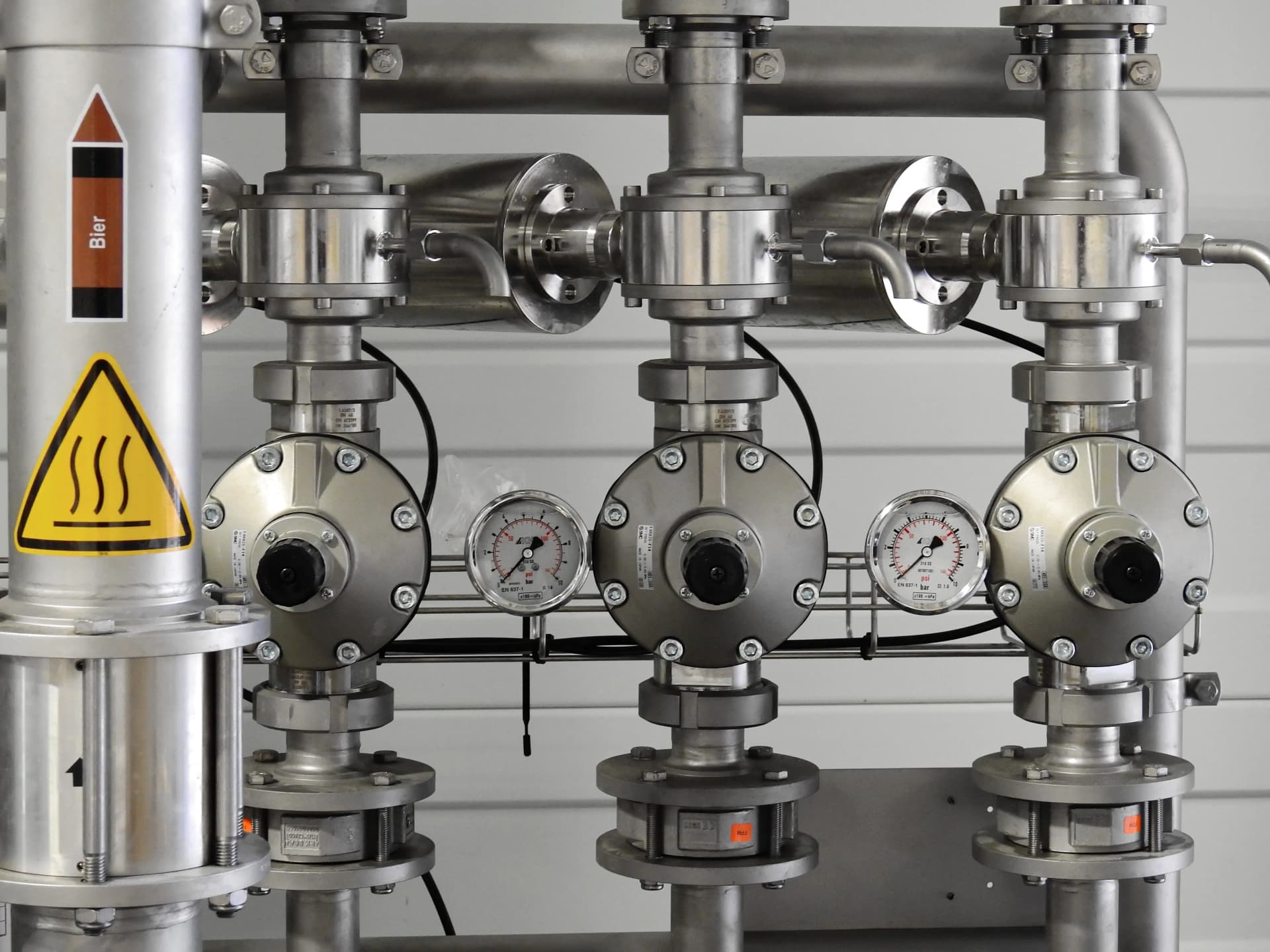
Complex industrial systems require careful pump selection for optimal performance
Comprehensive Comparison Table
The following table compares key performance and operational characteristics across all three pump types:
| Characteristic | Gear Pump | Vane Pump | Piston Pump |
|---|---|---|---|
| Maximum Pressure | 150–300 PSI | 200–500 PSI | 2,000–5,000 PSI |
| Flow Consistency | Good | Excellent (<1% pulsation) | Excellent (<1% pulsation) |
| Self-Priming | Excellent | Poor to Moderate | Poor (None) |
| Viscosity Range | 1–1000+ cSt (Excellent at high viscosity) | 10–150 cSt (Poor above 150 cSt) | 10–46 cSt (Requires thin fluid) |
| Volumetric Efficiency @ Low Pressure | 92–96% | 94–97% | 92–98% |
| Volumetric Efficiency @ High Pressure | 85–92% (Better with high viscosity) | 80–88% | 90–96% (Excellent) |
| Gas/Air Tolerance | Excellent (Self-primes air) | Poor (Vane damage) | None (Air destroys pump) |
| Noise Level | Moderate (~75–80 dB) | Quiet (~70–75 dB) | Quiet (~70–75 dB) |
| Cost (relative) | Low (Base cost) | Moderate (1.5–2.5×) | High (3–5×) |
| Maintenance Complexity | Simple (Field-serviceable) | Moderate (Specialist service) | Complex (Factory service typical) |
| Bi-Directional Operation | Yes (Reverse rotation) | Limited (Port reversal may not work) | No (Complex porting) |
| Contamination Tolerance | Moderate (150–200 micron inlet strainer) | Low (75–100 micron strainer) | Very Low (5–10 micron mandatory) |
Pump Selection Decision Framework
Use this framework to determine which pump type is appropriate for your application:
Decision 1: System Pressure Requirement
If system pressure is <300 PSI: Gear pumps are the preferred choice: lowest cost, excellent self-priming, robust design. Vane or piston pumps are over-engineered.
Where NAPCO fits within that range: the figures above describe gear pumps as a class. NAPCO’s own pumps are rated to 100 PSI: see the full engineering data. They are built for transfer duty, not for pressure service, so a system above 100 PSI needs a higher-pressure gear pump rather than simply a different pump type.
If system pressure is 300–500 PSI: Vane pumps become cost-effective if low-pulsation is important or inlet priming is acceptable. Gear pumps are still viable but approach pressure limits.
If system pressure exceeds 500 PSI: Piston pumps are required. Cost becomes secondary to capability at extreme pressure.
Decision 2: Fluid Viscosity
If viscosity >100 cSt (adhesive, asphalt, thick oil): Gear pumps are superior. Vane pumps experience excessive wear. Piston pumps cannot handle viscosity >50 cSt.
If viscosity is 50–100 cSt: Gear pumps are preferred; vane pumps are acceptable if pressure <300 PSI and low-pulsation is required.
If viscosity <50 cSt (thin oils, water, diesel): Vane or piston pumps maintain superior efficiency. Gear pumps experience more slippage.
Decision 3: Self-Priming Requirement
If self-priming from dry inlet is essential: Only gear pumps self-prime effectively. Vane and piston pumps require pre-filling or external priming.
If inlet is pressurized or pre-filled: Vane or piston pumps can be considered.
Decision 4: Installation Flexibility
If bi-directional flow or reversible operation is needed: Only external gear pumps offer simple inlet/discharge reversal.
If flow-smoothness and low vibration are critical (precision metering, clean room): Vane or piston pumps; accept higher cost.
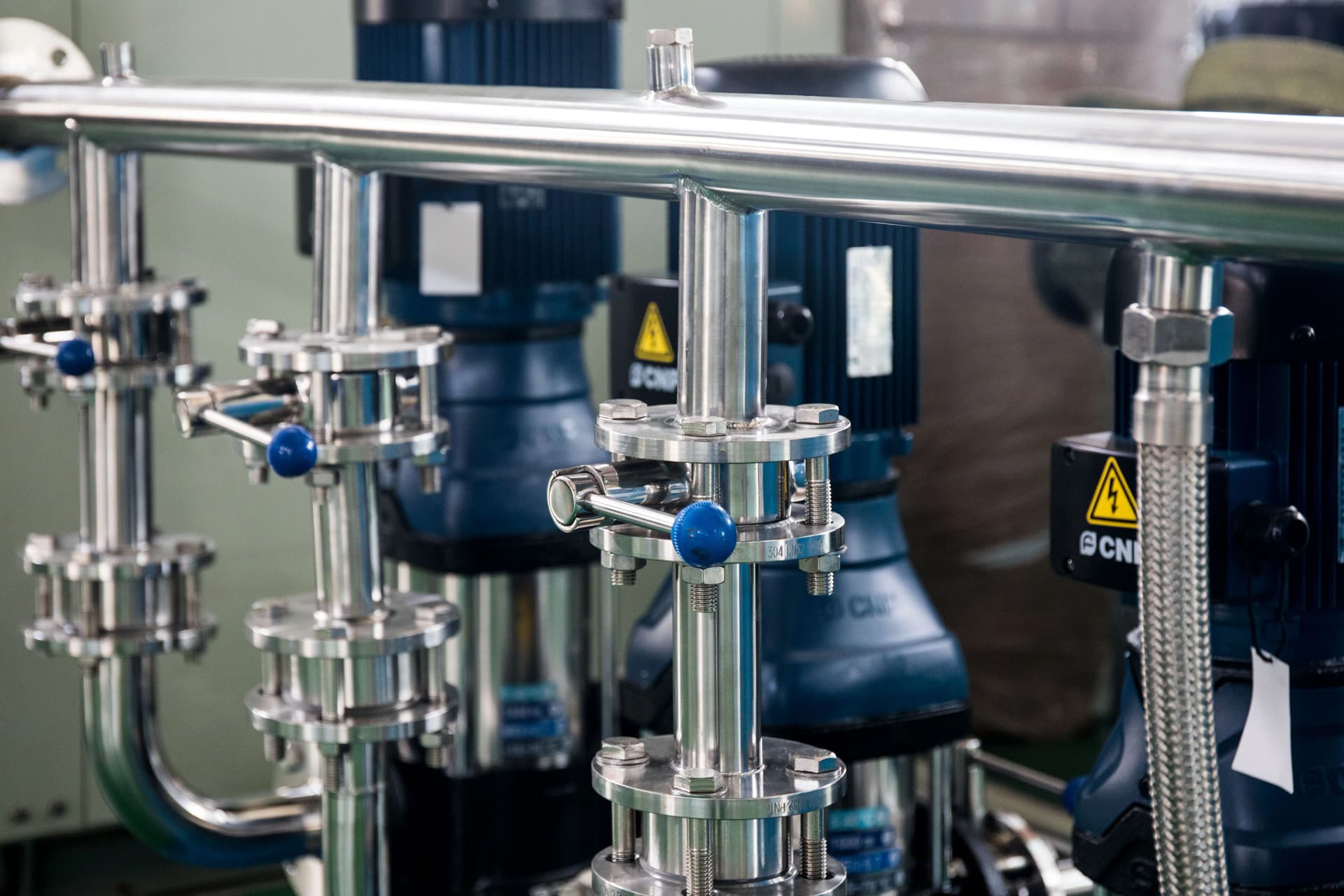
Precision engineering in gear pump manufacturing ensures reliability across all pump types
Why NAPCO Chose External Gear Pumps
NAPCO manufactures only external gear pumps. This focused design choice reflects the reality of industrial fluid transfer: the vast majority of applications (adhesive, asphalt, chemical, petroleum, food) require viscous fluid handling, robust self-priming, field serviceability, and cost-effectiveness. External gear pumps excel at all of these requirements.
NAPCO’s Strategic Focus: External Gear Pumps
Adhesive and Sealant Industry: High-viscosity fluid transfer is the dominant use case. Epoxy, urethane, and polyurethane adhesives (500–50,000 cSt) perform optimally with gear pumps; vane or piston pumps would fail due to wear or inability to handle viscosity. NAPCO’s PA300 and PA200 series deliver 158 GPM and 69 GPM respectively at maximum speed, sized for adhesive bulk transfer.
Asphalt and Bitumen Transfer: 500–5,000 cSt at application temperature demands exceptional high-viscosity capability. Vane pump vanes would experience unacceptable wear.
Petroleum Fluid Transfer: Fuel oil, lube oil, and crude transfer benefit from gear pump self-priming and ability to handle gas-entrained inlet streams (degassing during tank loading).
Chemical Processing: Chemical transfer applications benefit from stainless steel gear pump construction (PA-S models) without paying the extreme cost premium of piston pumps. The pressure requirement (typically <100 PSI) is well within gear pump range.
Repair Kit Philosophy: NAPCO provides field-replaceable rebuild kits (PK series) for gear pumps. Customers can rebuild pumps on-site with basic tools and standard components. This model is not viable for vane or piston pumps, which require specialist service and factory return.
Bottom line: NAPCO’s external gear pump design is optimal for the industries served: bulk transfer of viscous and corrosive fluids at up to 100 PSI and 158 GPM. Customers needing higher pressure than that, or very thin fluid metering (<10 cSt), should specify a different pump. NAPCO’s focus is industrial fluid transfer, where gear pumps deliver superior performance, reliability, and cost-effectiveness.
Related Technical Resources
- Rotary Gear Pump Working Principle: Complete Technical Guide
- What Is a Rotary Gear Pump? Complete Overview
- Gear Pumps vs. Progressive Cavity Pumps: When to Choose Each
- How to Size a Rotary Gear Pump
- Engineering Specifications & Performance Data
- NAPCO Rotary Gear Pump Models & Specifications
- Adhesive & Sealant Pump Solutions
- Chemical Processing Industry Solutions
Which Pump Type Is Right for Your Application?
Share your fluid viscosity, pressure requirement, flow rate, and inlet conditions with NAPCO’s engineering team. We’ll recommend the optimal pump type and help you understand the trade-offs in cost, reliability, and performance.